Campaign Trail is our analysis of some of the best new creative efforts from the marketing world. View past columns in the archives here.
For decades, design priorities based on male bodies have created a gender gap in everything from cars to smartphones. Some say the same is true in the razor category with products branded for and marketed to women.
“As long as women's razors have been sold, most options on the market actually haven't been designed with women in mind. They've been adapted from a man's razor or they've been designed as part of a one-size-fits-all solution across category,” said Toni Cruthirds, general manager at Billie.
Billie, which has long made purpose-driven marketing around normalizing body hair and eliminating unconscious bias central to its mission, is taking on the gender gap in razors in its latest campaign.
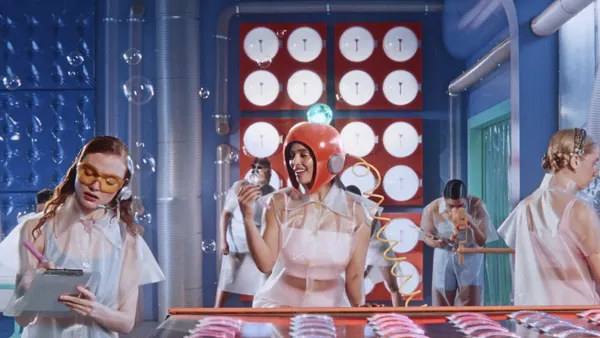
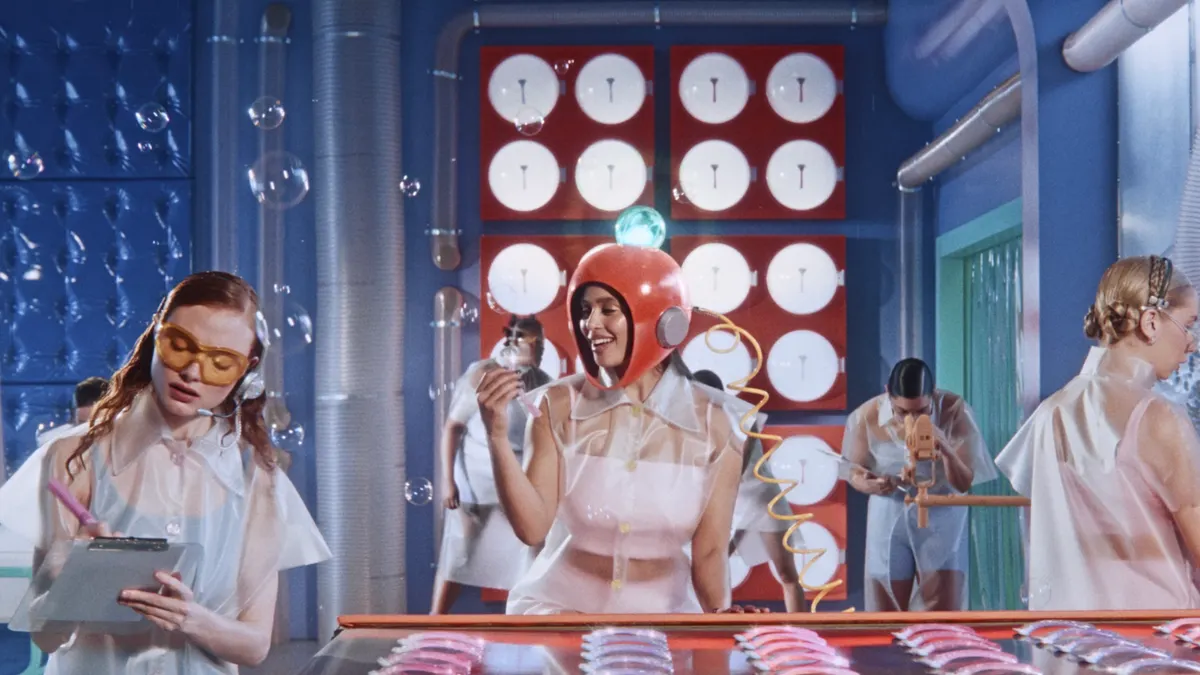
Enter the Billie Lab, a surreal world that imagines a softer, more playful process where products are conceptualized, engineered and created with women in mind, or, as the tagline says: “Designed for womankind.” Two 30-second spots are loaded with Y2K nostalgia for items like iMacs and CRT screens, lo-fi sci-fi in the form of fanciful machinery, and playful elements like slides, bubbles and a dreamy soundtrack full of sound FX.
“We wanted to make sure it felt like Billie, if Billie were a place. A place that’s as bold, whimsical, and unapologetically its own as the brand itself,” said director Olivia De Camps about the campaign over email. “We thought about how it would sound, the tone, the feel, the colors, performance, the whole experience. It’s like stepping into a bubble filled dream, where shaving isn’t just a task, it’s pure play.”
Or more simply: “Picture Willy Wonka, but swap candy for clouds of shaving foam, and everything feels just a little more playful and unexpected,” De Camps added.
Attributes into absurdity
For Billie, creating the Billie Lab with De Camps and its in-house creative team meant taking the brand’s commitment to closing the gender gap through product design and features like a pivoting head and grippable handle and turning it into entertainment.
“We like the idea of dramatizing the product superiority through really playful and unexpected tests,” Cruthirds said. “Leaning into the language of proof and validation that comes with a lab setting, but with a wink that is very Billie, really allowed us to turn that thoughtful design into something that you can see, while staying true to our brand tone, which has always been a balance of credibility with humor and levity.”
Saying Billie is designed for womankind is one thing — showing it is another. In developing the spot, the creative team discussed what that idea looks like in practice, from the set design to the amount of activity in each scene and beyond.
“The rich textures, the materials, the little sounds: We wanted to make a space that felt really immersive and dimensional,” Cruthirds said. “Every detail that you're seeing there from the button color on a conveyor belt, the type of magnifying glass that's being used, the machines that you don't really know what they are, but they look like they would be doing something … all of that was very thoughtfully done.”
Two of the most memorable elements in the videos looked to validate product features and qualifications in the most outsized ways possible. To demonstrate “no-slip grip,” a woman in rain gear holds onto a Billie razor inside a rainy wind tunnel, and to speak to the “dolphin-smooth skin” achieved by its products, a woman slides into frame to observe dolphins in a tank.
The Billie Lab campaign launched with paid social on March 10. The Edgewell-owned brand is leaning into a media mix of streaming and connected TV, online video and social influencers to boost its first campaign to center its razor, rather than its other personal care products, in some time.
“We’ve got the two 30-second ads, but they are a combination of vignettes about different product attributes, and that was super intentional,” Cruthirds said. “We storyboarded it and outlined it in a way that we could cut all of the vignettes into smaller spots.”