ORLANDO — The age of marketers being able to predictably plan, launch, measure and repeat campaigns is over. Most consumers expect brands to keep up with quick-moving online culture, and marketers have rapidly scaled up their content production to meet those needs. Artificial intelligence — both its adoption by consumers and integration into marketing organizations — is accelerating everything.
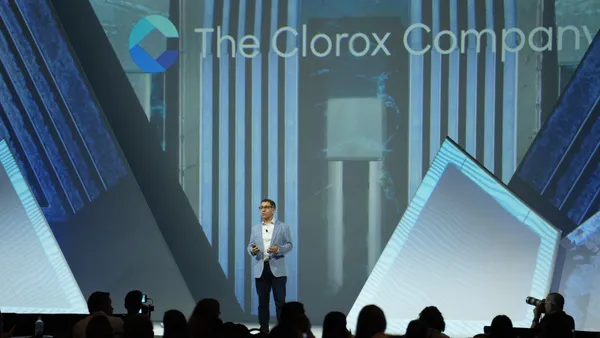
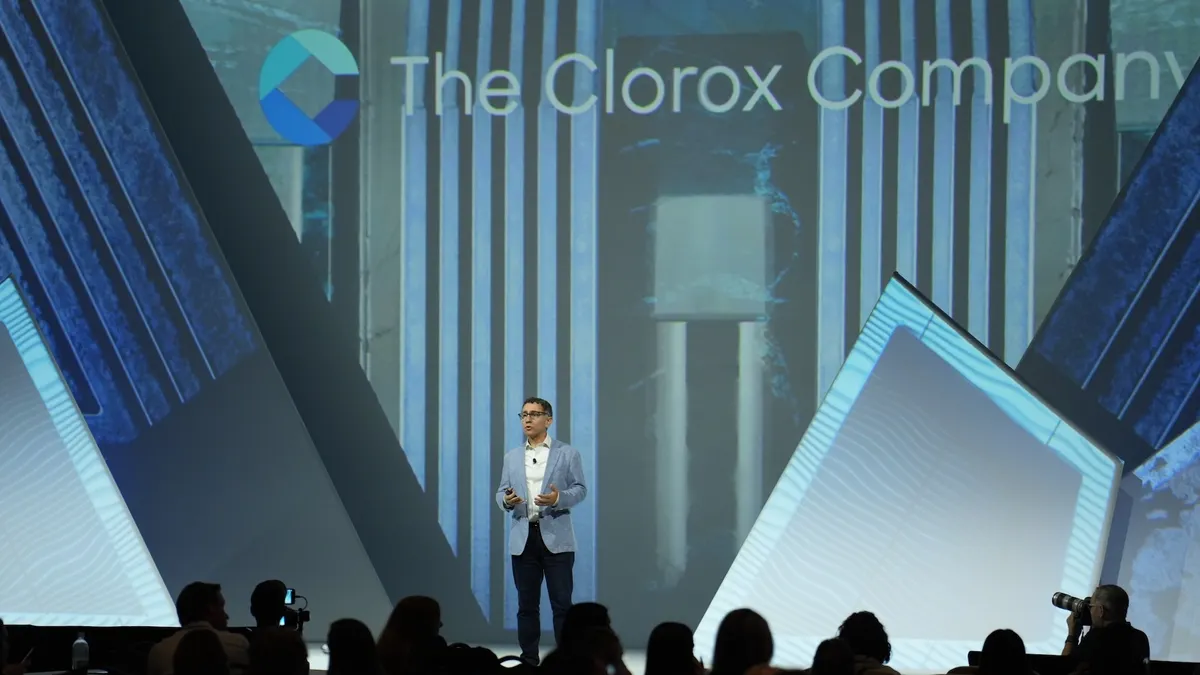
“The approaches and intuitions that came along with growing up in a world that was about big-bang campaigns actually can work against us all now,” said Eric Schwartz, CMO of The Clorox Company, during a presentation at the Association of National Advertisers Masters of Marketing conference on Oct. 22. “If the world is going mad and traditional campaigns aren't enough anymore, what replaces them?”
For Clorox, the marketer of cleaning supplies and other household brands since 1913, campaigns have been replaced with systems of continuous relevance that identify opportunities for brands to learn, adapt and improve. The marketer has deployed such systems for brands including Pine-Sol, Brita and Hidden Valley.
“It's not about showing up once with a big idea. It's about showing up consistently in the moments that matter for choice,” Schwartz said. “Instead of taking months to frame a brief and get a dozen decision-makers aligned to queue up and launch a yearlong campaign, how do we create something different?”
Clorox is building these systems with an engine that is powered by people, enabled by AI automation and amplified by partners. The people, “brand lions” in Clorox’s parlance, are bold, curious marketers who quickly spot signals and turn them into action. The power of AI is giving brand lions that ability to move faster, make small bets and enjoy freedom within a framework. Finally, agency partners across creative, media, technology and measurement help Clorox identify, execute and scale opportunities.
“When our marketers, technology and partners work together, something powerful happens. Less time talking, less time deciding, more time doing and learning. Ideas get into market faster. Learning happens faster, and improvement happens while those opportunities are still alive out there in that fast-moving world. All of this drives better consumer experiences, stronger business results. It catalyzes growth,” Schwartz said.
The executive, appointed CMO in March 2022, dug into several examples of a new model for Clorox brand marketing that prioritizes “intentional but flexible” and “insightful but bite-sized” efforts.
OMG Pine-Sol
In Clorox’s new marketing system, Pine-Sol, the nearly 100-year-old household cleaning brand known for its signature scent and cleaning power, needed to rethink social media as an always-on system for learning from and acting on consumer signals.
The result is “OMG Da Pine,” a social-first brand world on platforms including Instagram and TikTok where Pine-Sol can connect with consumers through original audio and meme graphics. After a year, Pine-Sol took its alter ego from content to commerce, launching four limited-edition products on TikTok Shop that sold out in hours. The brand has also brought learnings around scent to traditional retail environments with a seasonal apple cinnamon-scented product that launched for fall.
With the OMG Da Pine world, the brand — which was previously nearly dark on social — averages more than 150 organic posts a month, creates and tests content with more than 80 cohorts and averages a 13% engagement rate.
“Listen, adapt, expand and follow where consumers take the brand, and the results speak for themselves,” Schwartz said. “The most important one for CMOs is the marketing mix analytics that showed that we were increasing dramatically our effectiveness and our efficiency in the world of social as a system.”
Brita’s new clarity
Clorox was able to put a similar system in place for Brita, the water filtration brand, as a way to reach Gen Z consumers who are on their own for the first time. Social listening uncovered an insight around how Gen Zers see staying hydrated as an achievable act of self-care during complicated, overwhelming moments. The insight led Brita to launch a social-first, high-volume content model that organically produces more than 100 assets per month.
“At this volume, our algorithmic reach provided signal, as did engagement and dialogue, continually shaping the interaction and the content we created,” Schwartz said. “It was a whole different pace, a whole different metabolism for us inside the organization.”
Brita found success with a lo-fi 3D shark animation and an original pop song that reached 10 million views before the brand spent anything on paid media. That effort was the spark for the “At Least I’m Hydrated” creative platform that pairs hydration with daily struggles using awkward animations, stock backdrops and deadpan humor.
The efforts yielded 22 million engagements with a 8.17% engagement rate and a 1,742% year-over-year increase in organic impressions, per data Schwartz shared on stage. According to media mix analysis, the brand’s effectiveness and efficiency was “off the charts,” the executive said.
“Brita’s approach worked because the team turned a real Gen Z truth into platform-native content, and then used continuous listening and learning to scale what resonated with that audience,” Schwartz said.
Systems in action
Clorox in January launched Clorox Pure Allergen Neutralizer, a new line of air and fabric sprays, with a campaign created with agency BBDO Chicago, but even traditional ads are evolving within Clorox’s new systemic approach.
By using AI, Clorox was able to use in-market signals to optimize ad creative to better reflect which occasions and products were driving consideration and trial of the new brand. The new model allowed Clorox to rework its creative asset, without the cost of a reshoot or the time needed for a traditional campaign post-mortem. But the speed and savings were not the point.
“Even on big, well-supported launches [and] campaigns, the Clorox Pure team didn't launch and walk away. They launched, they learned, they optimized and they kept improving while the content was still live,” Schwartz explained. “The content is no longer finished at launch. It's built to keep getting better.”
This summer around the World Cup, Clorox’s ranch dressing brand Hidden Valley had an unexpected moment in the spotlight as TSA weighed in on international travelers packing the condiment in their carry-ons. Within hours of TSA posting about its policies, Hidden Valley replied with its own content and quickly developed a plan.
Clorox tapped social, PR and even a team of interns to build an organic content machine that generated more than 600 pieces of social content. The brand’s broader effort notched more than 6 billion impressions, 2,500 media placements and helped turn around market share that had been dragged by inflation.
“That's what happens when the relevance engine really starts to pur. Years of brand building gave us the foundation, and our people made it relevant in real time, with partners helping amplify it,” Schwartz said.
For marketers of all sizes and budgets, Schwartz provided three ways to bring Clorox’s lessons to life: move away from campaign calendars to continuous learning loops; remove friction between signal and action; and act before certainty exists. A new world requires a new way of marketing.
“Our old instincts won't keep up. Sometimes they won't even be right,” Schwartz said. “The only solution to match the pace is learning to build systems of continuous relevance.”