

Walmart’s U.S. advertising revenue grew 37% year over year in the three-month period ended Oct. 31, bolstered by strengths in e-commerce and assets like Vizio and Vibe.co. Walmart Connect, which makes up the lion’s share of Walmart’s U.S. ad segment, was up 36% in Q3, excluding the impact of Vizio and Vibe.co, according to an earnings statement.
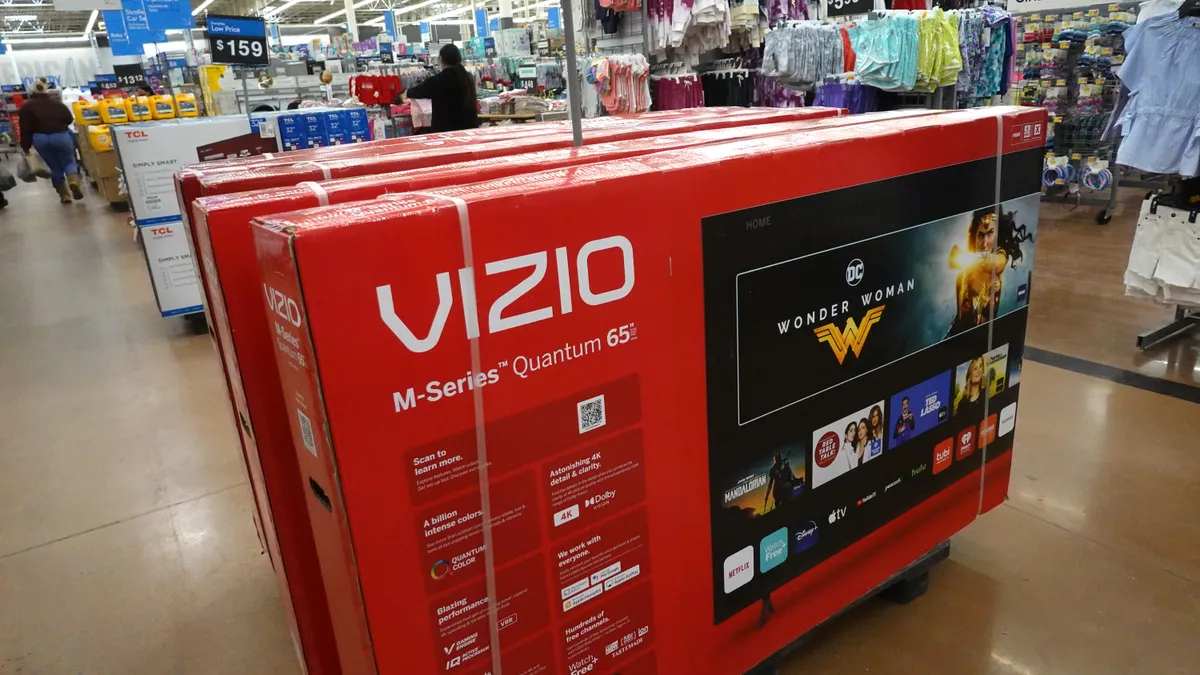
Vizio sold TV hardware at a steady clip, with unit volume up nearly 150% YoY, which broadens the audience Walmart advertisers can reach through the platform’s operating system, Chief Growth Officer Seth Dallaire said. The Vizio and Vibe.co acquisitions are part of Walmart’s strategy to shore up a foothold in connected TV, a premium video channel that diversifies its retail media footprint beyond onsite formats like sponsored search and display. Vibe.co, a self-service TV advertising platform, was recently integrated into Vizio and Walmart’s larger CTV offering following the acquisition’s close in August.
“We're now able to deliver capability for sales attribution through those Vizio television sets in ways that we have never been able to do before,” Dallaire said of the deal on a call discussing the retailer’s fiscal 2027 Q3. “We have a lot of room to run as we continue to sell more TVs.”
E-commerce grew 23% in Q3, with the addition of new merchants to Walmart’s online marketplace providing tailwinds for Connect. Stripping out advertising, Walmart’s e-commerce business is close to breaking even, CFO John Rainey said on the earnings call. Walmart raised its outlook for the year around the report, expecting sales growth between 4.9% to 5.2% compared to a prior forecast of 4% to 5% growth.
Executives were asked about the impact agentic artificial intelligence could have on retail media. Consumer-facing agents like Meta’s Muse can seek out deals, make product comparisons and complete transactions on the user’s behalf, which disintermediates the role ads typically play on the shopping journey.
Consumer curiosity about new products and brands hasn’t changed even as AI alters how they explore their options, per Dallaire, who nodded to the potential for Walmart to experiment with advertising in an agentic world. Walmart has its own conversational assistant, Sparky, which has seen usage in the U.S. grow 129% this year, the retailer reported. Sparky launched in June 2025.
“Conversational commerce and the way that people are creating queries and prompts in these agents is quite different than what we have seen historically,” said Dallaire. “But we are learning about those prompts and how to serve customers and allow marketers and brands to get their products in front of customers.”
Walmart is looking at agentic capabilities through two lenses as it relates to Vizio and Vibe.Co, Dallaire explained in response to an analyst follow-up question. One is the consumer-facing element, such as evolving how content is discovered and served via Vizio. Vibe.Co meanwhile is using agentic technology on the back end to draw in more small- and medium-sized advertisers that don’t have the budgets for high gloss TV campaigns.