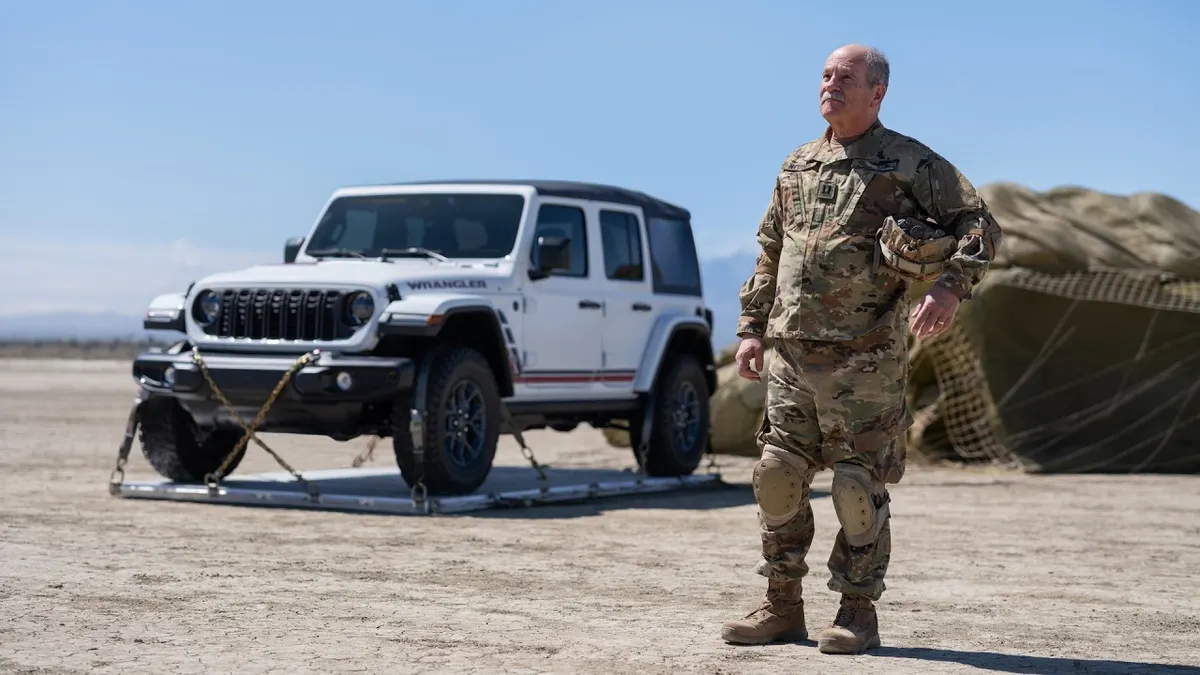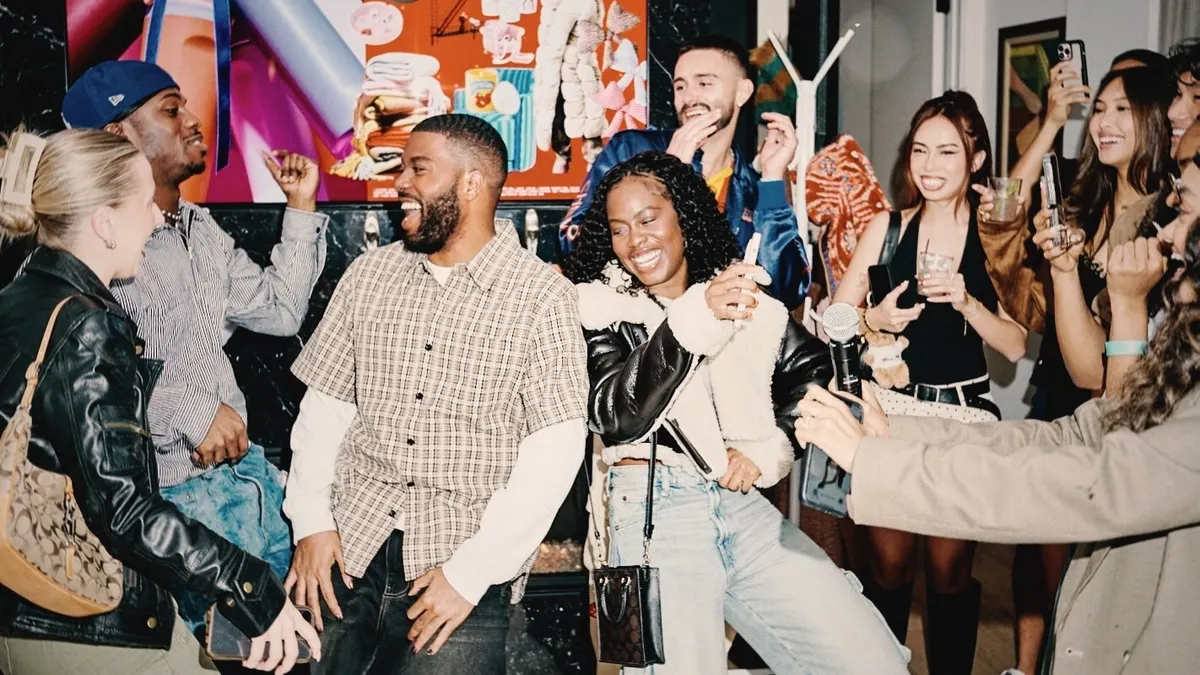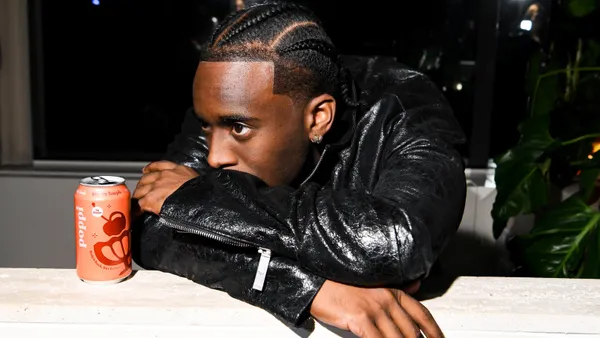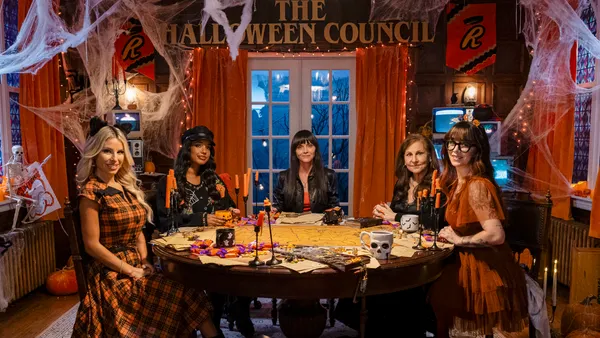


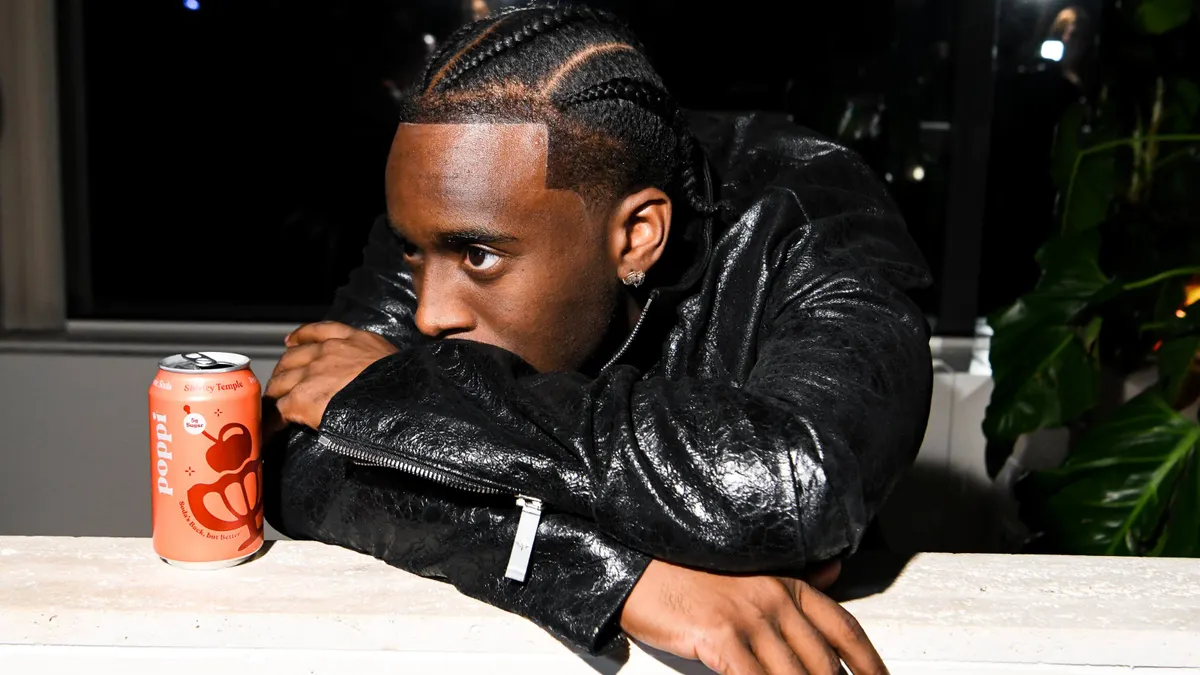
For a brand name that hasn’t even been around a decade, Poppi can seem ubiquitous. The prebiotic soda showed up multiple times at New York Fashion Week in September, collaborated on a pop-up at Miami Swim Week with luggage brand Béis, released packaging tied to summer blockbuster “Spider-Man: Brand New Day” and recently partnered with the Dallas Cowboys. The NFL deal was unveiled with help from the team’s cheerleading squad, who sport Poppi cans as hair curlers in social content.
The gap between New York Fashion Week and pro football may seem wide, and the audience overlap thin. Poppi says its approach is informed by a mix of gut instinct and identifying where its target audiences — predominantly Gen Z and millennial women who are seeking healthier alternatives to soda — are spending their time. The majority of Poppi’s culture team is made up of recent college graduates, some of whom are sourced from initiatives like its sorority rush program.
“We like to say we know our consumer because we are them. If it's not ‘F yes,’ it's ‘F no,’ which is a huge part of our partnership strategy,” said Poppi’s Head of Culture Sophia Sesto. “The ideas come from the team up … data and KPIs are normally backward-looking, not part of the brief or the plan of how we do things.”
There’s also Poppi’s nearly $2 billion acquisition by PepsiCo last year, a major bet from the food and beverage giant to adapt to shifting consumer tastes. Poppi’s footprint has expanded into new spaces both cultural — PepsiCo is a longstanding NFL sponsor — and territorial. The brand in February landed in the U.K., a move supported by an integration with reality TV smash “Love Island.” There have been bumps along the way as well: Poppi’s retail volume sales were down 3.6% in the first half of 2026, according to Beverage Digest data.
There are four verticals under Sesto’s remit: an influencer, talent and community team; a social team; a collegiate team; and an events and partnerships team. Marketing Dive spoke with Sesto, who’s been with Poppi for over five years, about how she measures success, life under PepsiCo and what marketers get wrong about culture.
The following interview has been edited for clarity and brevity.
Marketing Dive: What does New York Fashion Week do for building up Poppi?
SOPHIA SESTO: We try not to show up in the same way twice. We've done pop-ups [at NYFW] in the past. This year we worked with eight different designers, our largest amount ever, and we showed up differently. That could be a sponsorship where we are the beverage on the seat for the shows. That could be popping off at after parties. One of our incredible designers actually made this chrome Poppi purse. We did a collab hoodie with Danielle Guzio, too.
It's meeting our community where they are, or trying to find a way to integrate the brand into conversations that they're already having. New York Fashion Week comes every year. If you're at home scrolling on TikTok, you're seeing people's outfits, you're seeing the shows. If you're our community out on the ground, we want to make sure Poppi's part of those moments. We do have another saying here: “We don't bring sand to the beach.” We're not trying to create new behaviors. New York Fashion Week is a natural fit for us, being at the forefront of culture and fashion.
You recently partnered with the Dallas Cowboys cheerleaders. The gulf between that and NYFW feels large. How do you identify those partnerships while still having a consistent brand?
The Cowboys is a new cultural ecosystem, but it still brings that personality and creativity that the Poppi brand is. When we're identifying how we show up, we ask ourselves: Are we freaking excited about this? Does this make sense for our community? Are they there? Are they already engaged? And would this be exciting news for them to receive? Visibility is not the goal. The goal is an engagement.
Was PepsiCo telling you, "We have an NFL relationship. What's Poppi going to do in this space?" or were you already pursuing a partnership like that?
We've been lucky with our transition to PepsiCo. The term they coined is, "Let Poppi be Poppi." We've been lucky to still have the reins and make the calls. We made the call, but with the power of PepsiCo, we are able to expand internationally. We just launched in the U.K., which is amazing. We've been able to launch at places like Starbucks. There definitely are some incredible resources that we get from our PepsiCo family. But I will say, too, they're very open to the Poppi influence.
Are there specific areas of culture you're investing more in or previously underserved?
We're trying to be ahead of the trends. An example: Last year — from the response to a meme, believe it or not — we created a custom limited-time offering with a popular islander from "Love Island" USA named Amaya Espinal. We were just making a fun meme, playing into social culture. We're obsessed with "Love Island," and this is how the team manifests the work that we want to do. But it's our best [performing] post of all time. It reached 90% non-followers; it has over 250,000 likes. That was an early sign that “Love Island" feels inherently Poppi. We actually brought that flavor to life in 12 weeks.
It was so successful that we decided this year we're doubling down on "Love Island." We did a full licensed can and had [an] in-show integration. We launched a spot with Olandria [another show contestant]. We had thousands of influencer mailers that had bikini tees with the mic around the neck that mimicked the mics the islanders wear on camera. We're looking at our partnerships and our community's response and finding ways to go deeper.
I would say no year looks the same for us. We like to have that broad mix. The Cowboys, "Love Island," Béis, Spider-Man — they're all so different, but uniquely Poppi. They touch our consumers' dynamics, so we touch them in different ways, like summer travel, summer TV binging, going to the movies.
On "Love Island,” that went from a post to an LTO and then a bigger partnership with the show. Is that all under the culture team's remit?
When the meme popped off, I went straight to our CEO and said, "This is insane. We have to do this." The whole team came in. It shows Poppi leadership really trusts us. Our R&D team started mixing, figuring out how to bring this flavor to life. Our [e-commerce] team was figuring out how to backload it into Amazon ASAP. Target buyers were calling up our sales team. Our creative team went into the [mock-ups] of the actual can label.
Amaya was actually still in the villa [“Love Island” contestants are largely cut off from outside contact], so we were reaching out to her family trying to get a hold of her. We reached out to her brother, her cousin, the nurses she used to work with in the hospital she was at before she went on the show. When she got out, she was so excited. Within a week, we did this whole product launch shoot. Then we brought in our production team. She's from Queens, so we brought the beach to Queens, and we did a beach photo shoot on a rooftop.
That all happened within a month. Then, when the product actually rolled out 12 weeks later, it really was a full-team, 360-degree effort. For the partnership this year, we formally made the relationship with ITV, the producers of “Love Island." We approached them with our media team and we actually worked with them internationally for "Love Island" U.K. It was a great way for us launching in the U.K. to do a Poppi moment early out the gate.
What do you pay the most attention to when measuring the success of a cultural activation?
It's true participation. We want to make sure the comments are popping off. We want to continue seeing the partnership show up organically. Examples like sorority recruitment — we'll show up in a big way during rush week, and then continue to see those chapters members post Poppi organically. Sharing the product, being influenced by the product — Spider-Man fans sneaking Poppi into the movie theater — that's what we're looking for. We're trying to give them something more than just putting our logo around things.
What do you think marketers get wrong about culture?
You can't force a moment. We could be sitting for an award show or an album drop, and if there isn't a moment, we're waiting. It's okay to move on. You want to come out the gate with those "F yes" ideas, because that's what stops the scroll.
At Poppi, the culture is not data-driven. It's funny because when we do the stuff that feels the most fun, that's when the data is off the charts. Maybe that is a good measure for us. But if we're all talking about something, or just personally obsessed with it, that's a good instinct for us to know there's got to be a way to integrate. No one wants to be sold to ads. When you're working with a creator, how do you make it something exciting — collaborating with them to give people what they want?
We're always thinking: What would we be excited to see? What would we want to engage with if we were in college? Who would we want to surprise us at our sorority house? That lens has always steered us in the right direction. I feel like people get caught up in a brief. We are known to not have briefs.