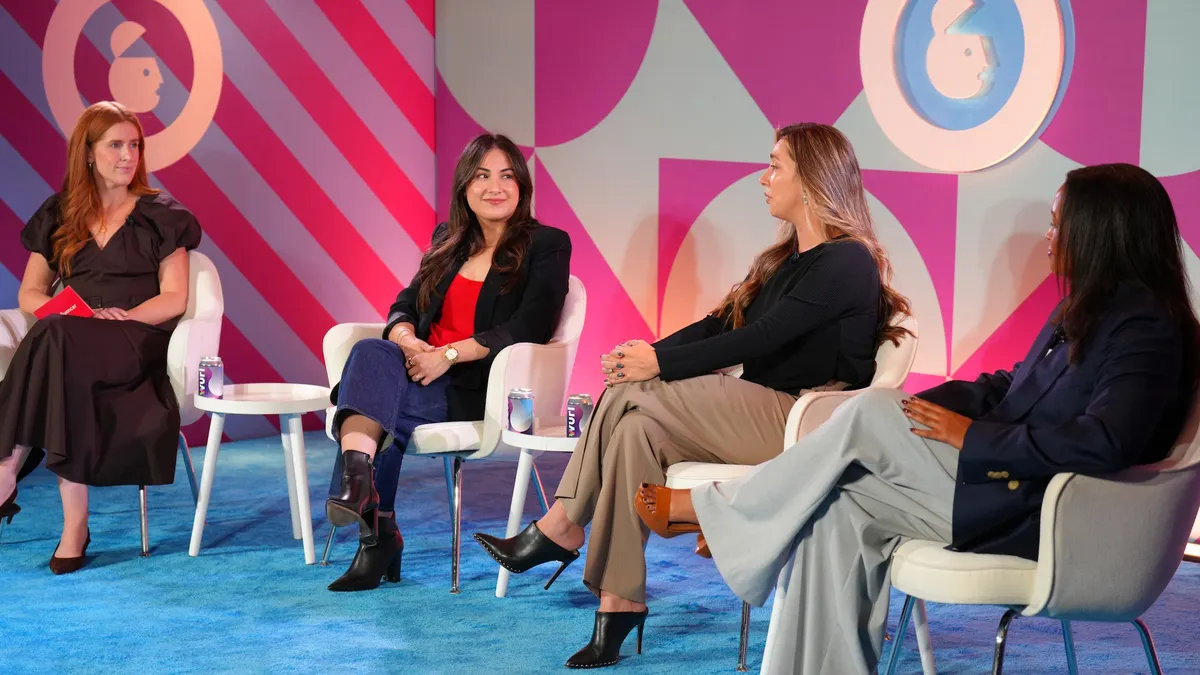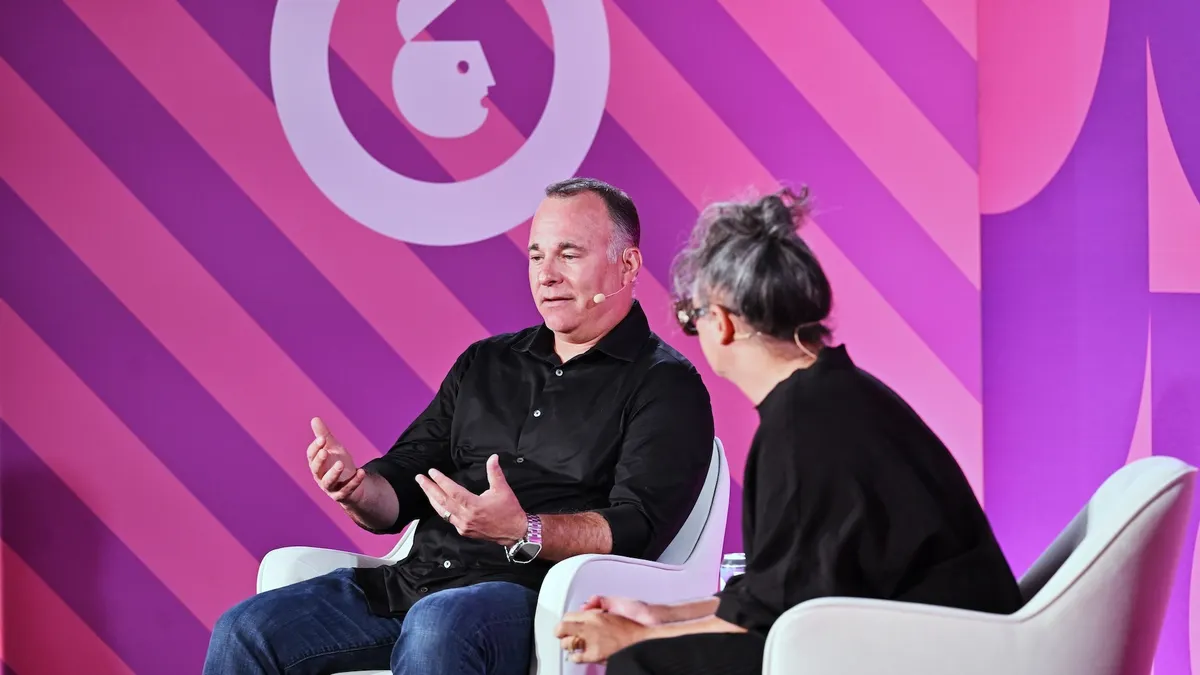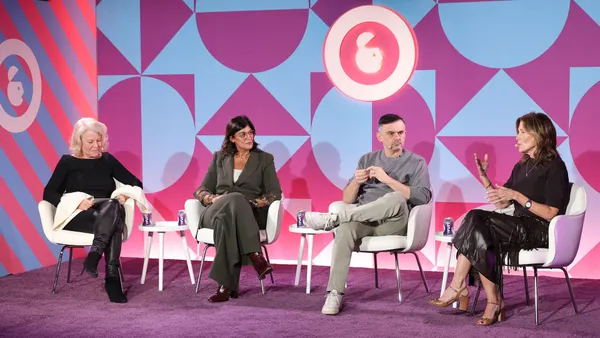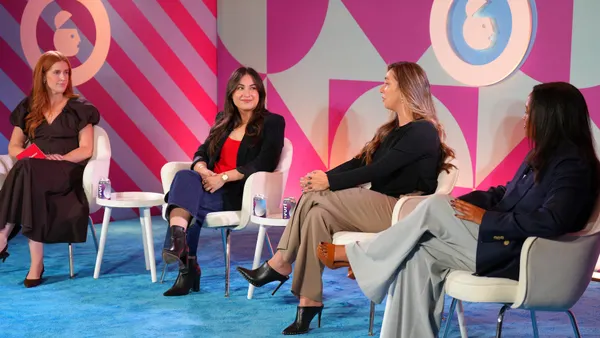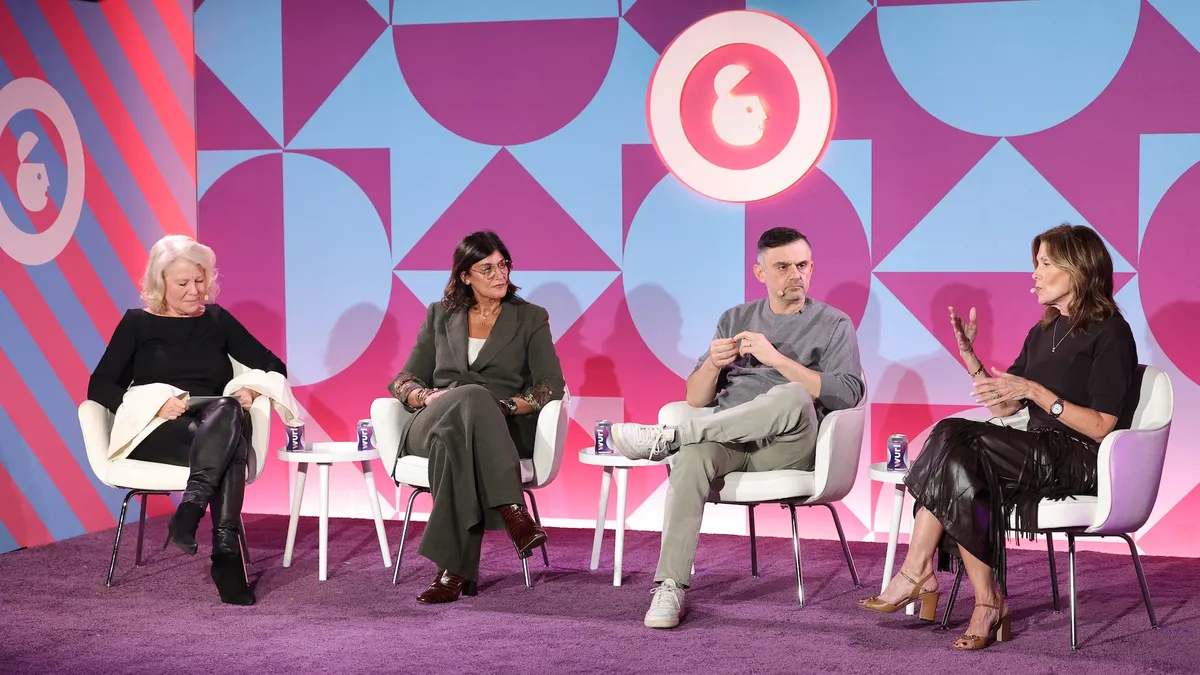
NEW YORK — As artificial intelligence and the creator economy accelerate the digitization of daily life, consumers are increasingly hungry for analog experiences in the real world. The need for marketers to balance these two imperatives — a concept that agency VaynerX calls the “relevance barbell” — was the topic of a session at Advertising Week New York on Oct. 5.
“We think that there will be many things commoditized by AI over the next decade,” VaynerX chairman Gary Vaynerchuk said. “I'm aware that there's a lot of demonization of AI in society and within our industry, but AI is laughing at our hypocritical opinions, grounded in our own financial self-interest, and will continue to evolve.”
In this AI-fueled environment, VaynerX is committed to helping brands meet their needs by viewing experiential marketing as production days for social creative at scale. JPMorgan Chase, for example, is leveraging its 5,000-plus branches and events like Chase Sapphire’s Dinner on the Court at Madison Square Garden to engage with people and create content in the digital space, CMO Carla Hassan explained on stage.
Target is adopting a similar approach to experiential marketing. The retailer in September showcased its legacy of design — the focus of a recent campaign — with a two-day presentation at the New Museum during New York Fashion Week.
“That's where we're finding the power with the two sides of the barbell: creating experiences that are worth coming to and worth experiencing, so that they become worth sharing,” Michelle Mesenburg, senior vice president and chief brand officer at Target, said on the panel. “You're giving something incremental to people that they want to take forward and tell the story of their experience in their words, in their way, so that's meaningful to their community and it amplifies your brand in a more powerful way.”
While pop-ups and branded events are nothing new, Vaynerchuk stressed that experiential marketing must be primarily strategized as a driver of shareable social creative content. By removing the silos between events and content, marketers can save money and operate more seamlessly than they have previously, he explained.
Beyond a way to engage with digital-first consumers, social content is also emerging as a way to push back at headwinds around discoverability, which continues to evolve amid the rise of AI. Large language models are scraping brand videos and digesting information that then affects how brands show up in consumer queries, Hassan said.
“I would argue every brand … is under spending on organic social, just for the purpose of the LLMs and AEO/GEO — forget about the fact that it should be the primary form of advertising in 2026,” Vaynerchuk said.
Evolve or die
The emergence of the relevance barbell speaks to the kind of changes that brands must think about when adapting marketing to consumer needs and market realities. In this changing landscape, JPMorgan Chase’s marketing organization has worked to innovate, giving people the opportunity to fail and learn from the experience, Hassan said. That approach is crucial to future-proofing advertising, Vaynerchuk explained.
“I would argue that a shocking amount of money continues to be wasted on things that no one — no one — believes in, yet the inertia of corporate continues to justify,” the executive said.
The outspoken Vaynerchuk went on to call out agency holding companies for putting their financial margins above client needs, calling the controversial practice of principal ad buying a form of fraud that is undermining the advertising industry.
“The amount of in-housing that has gone on in the last decade is an indication of the shortcomings of the advertising agency’s support of these clients,” he said. “Clients do not want to [go] in-house. In fact, CFOs hate it because it makes them vulnerable with more overhead.”
Regardless of whether they leverage holdco agencies, independents like VaynerX or in-house shops, marketers must continue to adapt in an environment where technology like AI can rewrite the rules of marketing seemingly overnight. Vaynerchuk called for marketers to be more consumer-centric and less focused on ad industry awards and headlines.
“The reason you get to 80-person events instead of running television ads at scale is you start to realize three people at an 80-person dinner can impact your business more than a potential 10 million people seeing a commercial ever because it's 2026 and no normal human being on Earth watches a f------ 30-second commercial,” Vaynerchuk said.
“Even during sports, they do not watch the commercial unless it's Super Bowl, which is grossly underpriced,” he added. “Everybody should buy one.”