The following is a guest piece written by Laura Brett, a partner at Simpson Thacher & Bartlett LLP. Opinions are the author’s own.
Advertised prices affect consumer purchases, so sales and discounts are part of every marketing tool kit. When an algorithm sets that price differently for different customers, the representation can create legal exposure — not just under new algorithmic pricing restrictions, but under false-advertising laws, too.
The stakes are getting higher. By Dec. 31, New York Governor Kathy Hochul must decide whether to sign or veto the state's proposed One Fair Price Act, a sweeping ban on individualized pricing across most industries. It's the clearest sign yet that legal risk from algorithmic pricing is growing for a widening range of professionals.
Algorithmic pricing allows marketers to charge different people different prices for the same products or services; it uses software to set prices automatically, based on data ranging from demand and inventory to personal signals such as browsing history, location, or loyalty status. For marketers and advertisers, individualized pricing is the holy grail of price-points — the right number, at the exact moment, to convert someone just browsing into a purchaser. For regulators, however, it raises concerns about privacy, transparency, fairness, and pricing power.
The risks aren't theoretical. In Dec. 2025, after Consumer Reports contended that Instacart was charging some shoppers up to 23% more for identical items, tremendous backlash followed. Instacart halted the practice, but New York Attorney General Letitia James still demanded that the company turn over its pricing records.
Framing the technology
Understanding algorithmic pricing — and the legal issues it presents for marketers and advertisers — starts with a core distinction: Dynamic pricing is the airline or hotel model; prices change based on inventory, demand or time, but every customer sees the same price. That's generally safer ground for companies that provide goods and services.
Surveillance pricing, as some advocates and regulators call it — marketers use the term “personalized pricing” — is different: prices change based on the customer. That poses greater risk, not just for failing to be transparent about the practice but for using it at all depending on what’s being sold.
The major fault line is charging different customers different amounts for the same product or service. For advertisers, the issue can be particularly challenging. Different campaigns, promotions and price points can amount to individualized pricing and raise the same questions. A promo code sent to one audience segment, a retargeted offer that undercuts the price everyone else sees or a members-only price can each put different prices in front of different people for the same item.
Reviewing the emerging regulatory landscape
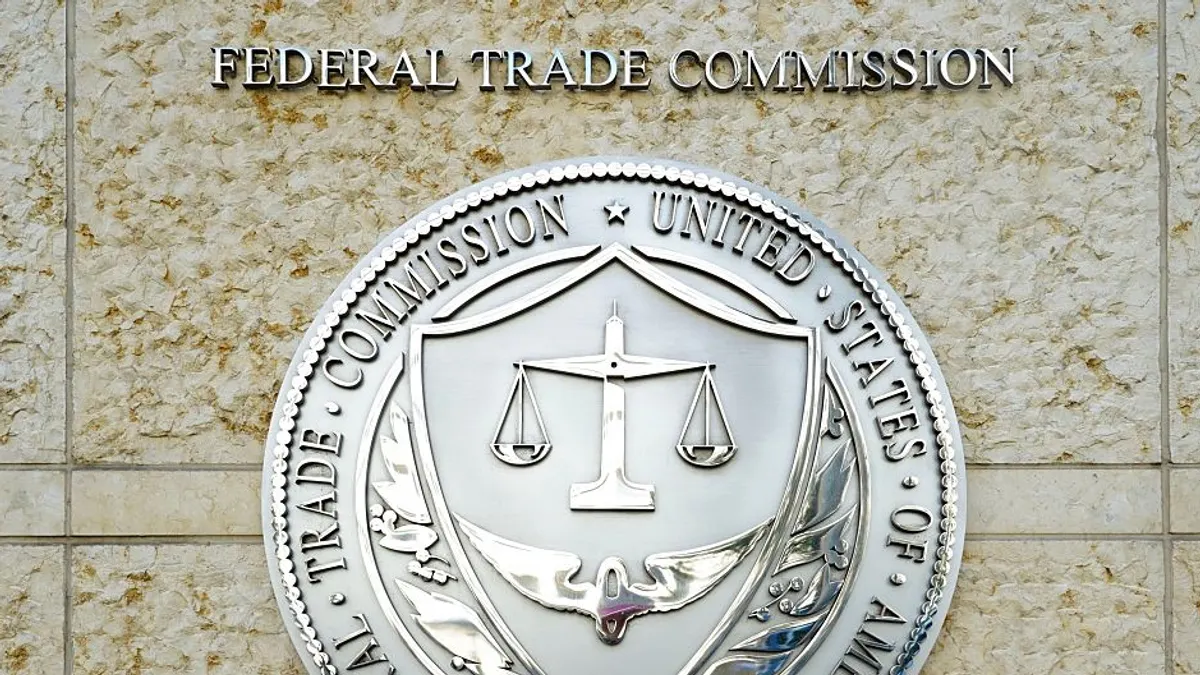
Dozens of bills, with different legal rationales, are pending across more than 20 states. A House Oversight committee probe has requested records from companies including Lyft and Uber over concerns about opaque pricing. The FTC has examined the practice through consumer-protection and antitrust lenses and has published a draft policy statement outlining how personalized pricing can be misleading or unfair.
Some regulations ban personalized pricing for certain industries. States that restrict individualized pricing currently — New York’s more sweeping, pending ban excepted — focus on grocery or retail. Others require disclosure, and some do both. Regulatory frameworks even vary in the language of the mandated disclosure. If you're reading this in New York, you've probably seen a message that reads “This price was set by an algorithm using your personal data.” Enforcement rights vary as well: New Jersey allows for private rights of action, and in some instances, provides for treble damages.
States can also regulate algorithmic pricing via antitrust laws. That approach, together with consumer-protection scrutiny, is also being applied at the federal level amidst rising affordability concerns. Rules that require truth and transparency in advertising apply: If one customer sees an item at $15 and another at $20, a customer could be misled that the advertised price is widely offered, or that a sale price reflects a true discount. Promotions targeted at specific audiences, even when consumers are offered discounts or coupons that save them money, could raise flags as regulators bear down on which price each user has actually seen and why.
The professionals' challenge
Professional teams often set the rules that drive pricing. Adoption tends to outrun analysis: a new pricing tool gets rolled out because it works, before anyone asks whether it may cross legal tripwires. That's already a familiar pattern in advertising law, where marketers find ways to drive revenue and legal finds out after the fact.
A few practical points about algorithmic pricing already stand out. Loyalty and group discounts pose lower risk if they're transparent and criteria based. Pricing by device or location, however, raises flags. Third-party vendors can elevate risks: A tool shared across competitors may suggest coordination. Meanwhile, disclosure requirements are creating UX and creative constraints, and can lead to expensive, and sometimes clumsy, retrofits.
Immediate steps
Uncertainty makes it essential to have a concrete plan. Here are some steps that marketing professionals can take immediately.
- Audit: What personal data feeds your pricing? Which campaigns show different prices for the same item? What do vendors do with the data? Advertisers should also review DSP and ad-platform targeting criteria for anything that doubles as a pricing input.
- Map: Know how you're pricing, and where. Be wary of using personal data, and recognize that what's permitted in one jurisdiction may not be acceptable in another. It’s easier than you think for marketing to reach a national audience. Have legal counsel involved from the start, as a thought partner rather than a final check. An ounce of prevention beats a regulator's cure.
- Recognize distinctions: Different teams face distinct challenges. Marketing and advertising professionals should know which campaigns rely on dynamic pricing versus personalized pricing, since the two carry different levels of risk. Advertisers should also be clear about whether a campaign is varying offers by audience or uses targeting for setting prices.
- Keep your antennae raised: Technology is advancing rapidly, and uncertainty is increasing. Legal considerations mean you can't solve just for speed.
Algorithmic technology is capable, and improving rapidly — why tap the brakes when it's running so well? Because pace accelerates risk, and legal threats are rising. Professionals shouldn't disdain the technology; after all, your competitors won't. But there's a better choice than standing still or racing into trouble. Advance with caution. Regulators are watching.